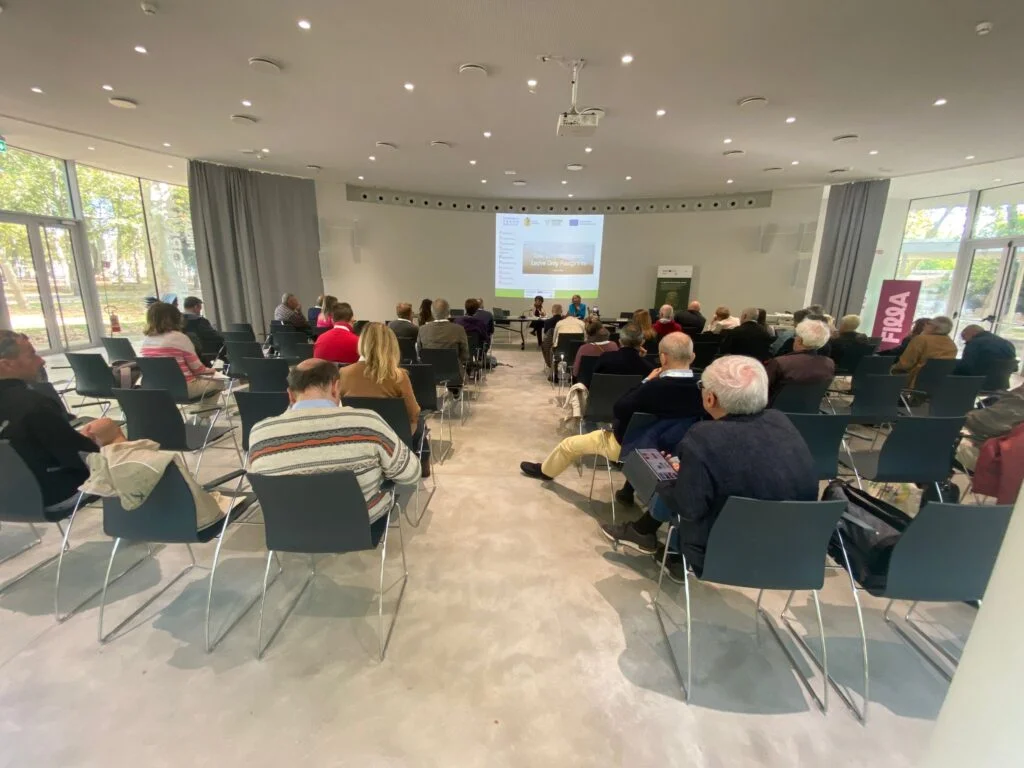
On October 2, 2025, the second of three BauNOW Hackathons took place in Bologna, at the Auditorium Filla in Parco della Montagnola, organized by Kyoto Club within the framework of the Interreg Euro-MED project “BauNOW – New Business as Usual.”
The event, held in collaboration with the Fondazione IU Rusconi Ghigi, gathered 61 participants — experts, engineers, journalists, students, local administrators, and citizens — who came together to explore new approaches for supporting the Green and Just Transition in the Emilia-Romagna region. The Hackathon was also live streamed on Facebook, reaching 745 viewers, confirming the growing public interest in sustainable transformation and climate action.
Organized with the support of the Order of Journalists and the Order of Engineers, the event was accredited for professional training credits and served as a space for cross-sectoral dialogue between academia, local authorities, and practitioners. Participants discussed how to foster the region’s ecological and social transition through innovation in energy, industry, agriculture, and tourism.
The morning session focused on introducing key challenges and opportunities related to the regional Green and Just Transition.
Speakers included Silvia Zamboni, journalist and BauNOW Project Manager, who emphasized that climate action must become a central political and societal priority. Presentations showcased innovative local initiatives — such as the Biodistrict of the Bolognese Apennines, supporting small rural farms through cooperation and solidarity, and Ravenna’s FOOTPRINTS project, promoting sustainable and responsible tourism through green mobility and community participation.
Other contributions explored the Doughnut Economics model as a tool for linking environmental, social, and economic sustainability, the cooperative movement’s role in driving innovation, and industrial data showing the region’s progress in renewable energy investments.
The afternoon session was dedicated to the European policy dimension of the transition.
Cristina Guarda, Member of the European Parliament (Greens/EFA), presented recent developments under the European Green Deal and Common Agricultural Policy (CAP), warning that ambitious climate goals risk losing momentum at the European level. She underlined the need for participatory governance, long-term planning, and clear regulatory frameworks to ensure that the ecological transition benefits people and communities, not only large-scale producers. Guarda also called for the adoption of a European Climate Law with binding targets for 2040, aligning agricultural and energy strategies with the UN 2030 Agenda.
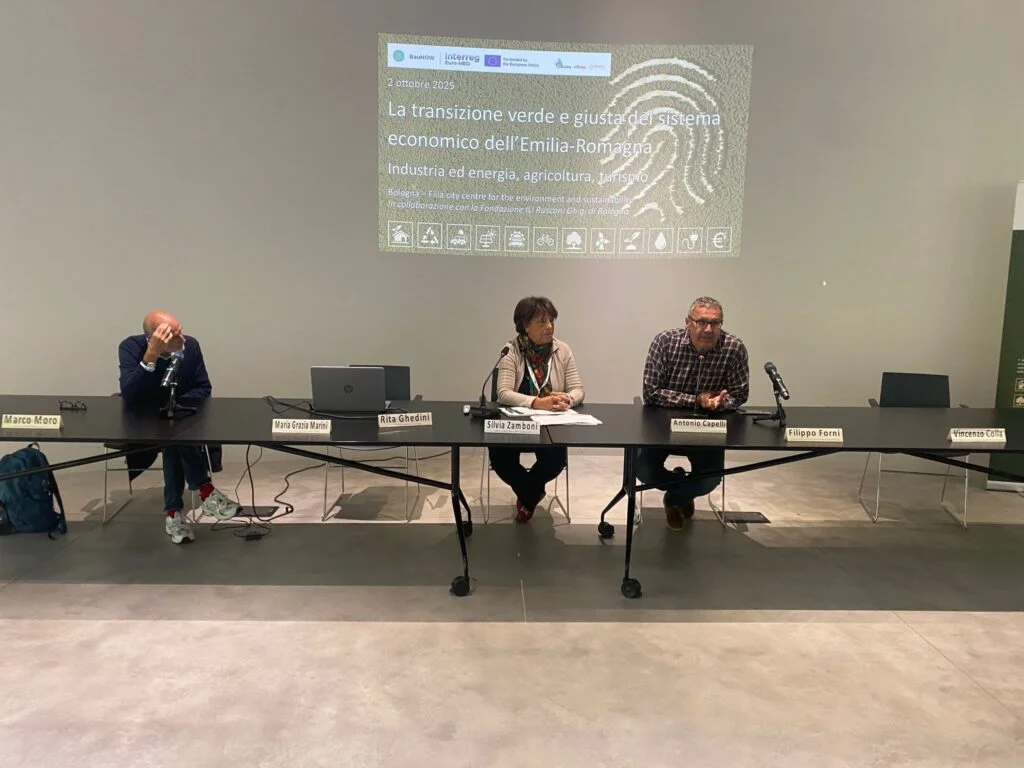
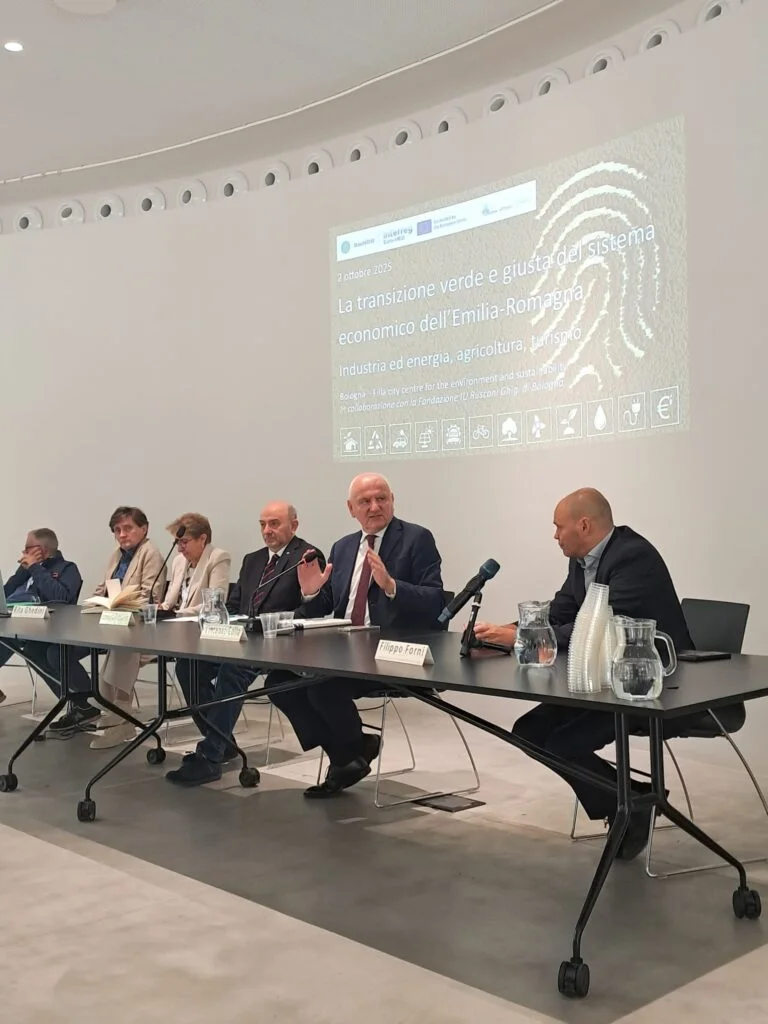
The Hackathon concluded with a joint working session, where participants co-created policy recommendations to strengthen the ecological transition through education, innovation, and community engagement — reaffirming that sustainability is not only a policy objective but a shared cultural value.