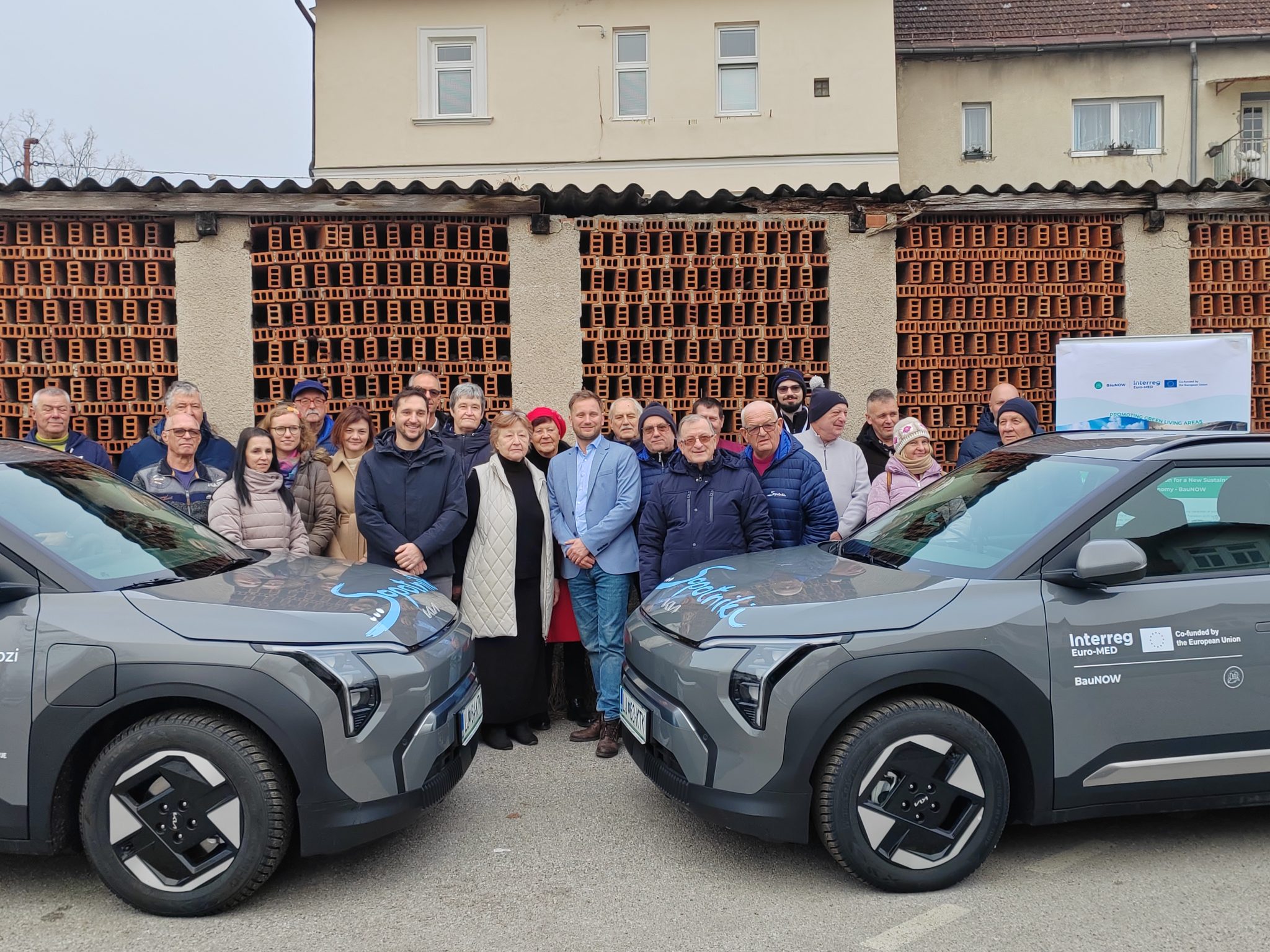

In the Slovenian pilot area of Kočevje, the project team focused on developing e-mobility solutions that combine sustainability with social inclusion. Together with the Municipality of Kočevje, they worked on two key actions: upgrading local volunteer transport services with 2 new electric vehicles and assessing the actual mobility needs of elderly and mobility-impaired residents.
A total of 74 respondents participated in the survey, including retirement home residents, health centre users, pensioners and volunteers. The message from users was clear: accessible local transport is a necessity. The survey revealed that:
- half of respondents would use the service regularly,
- three quarters would prefer to book rides by phone,
- users who had already tested the service reported a very high level of satisfaction.
Respondents most frequently mentioned trips to grocery stores, medical appointments, public institutions and the cemetery, while many also highlighted leisure destinations such as Rudnik Lake. This shows that mobility is not only about reaching essential services, but also about maintaining independence, social contact and quality of life. The survey results now provide the Municipality of Kočevje with valuable guidance for the further development and expansion of assisted local transport.
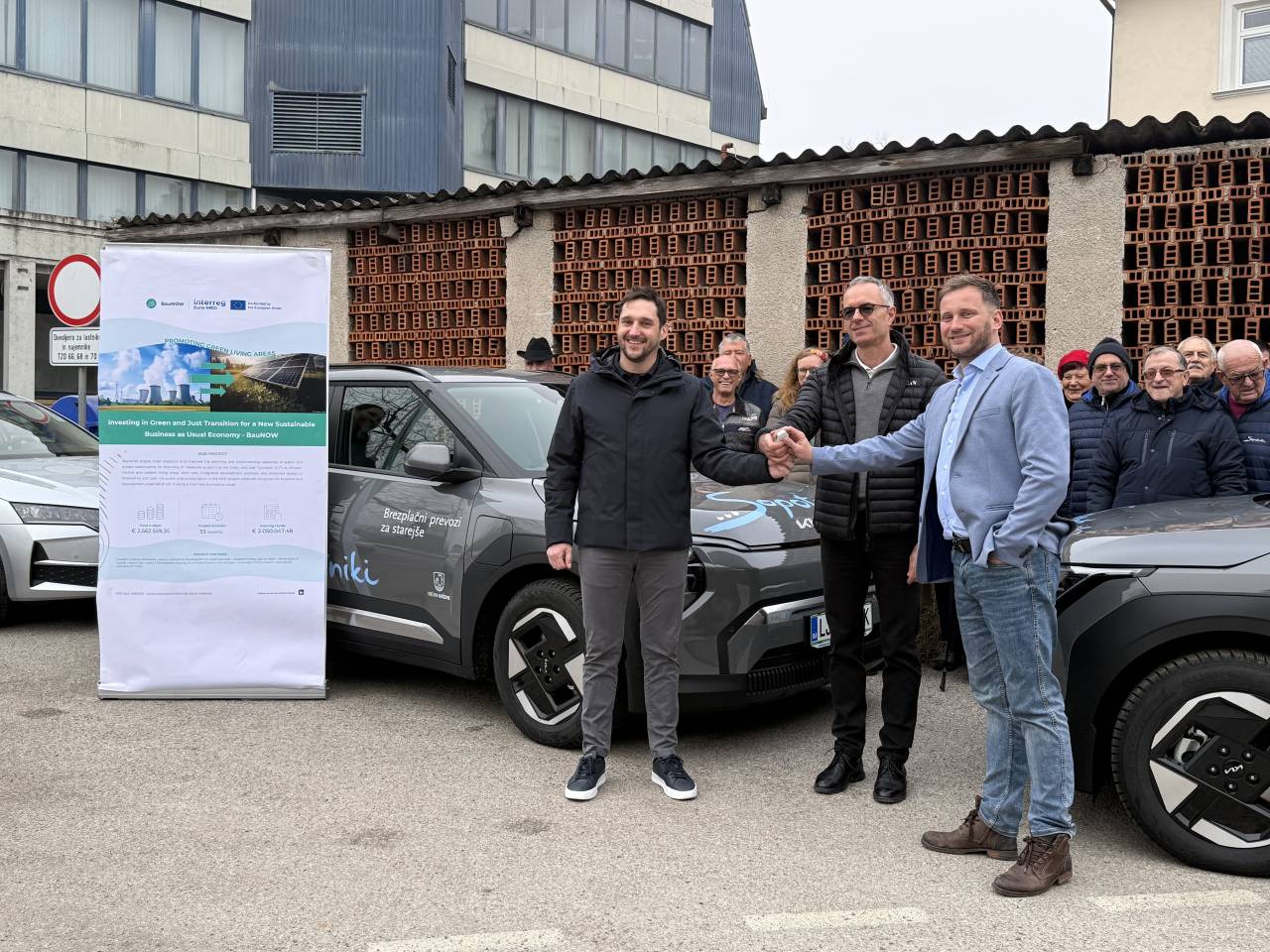
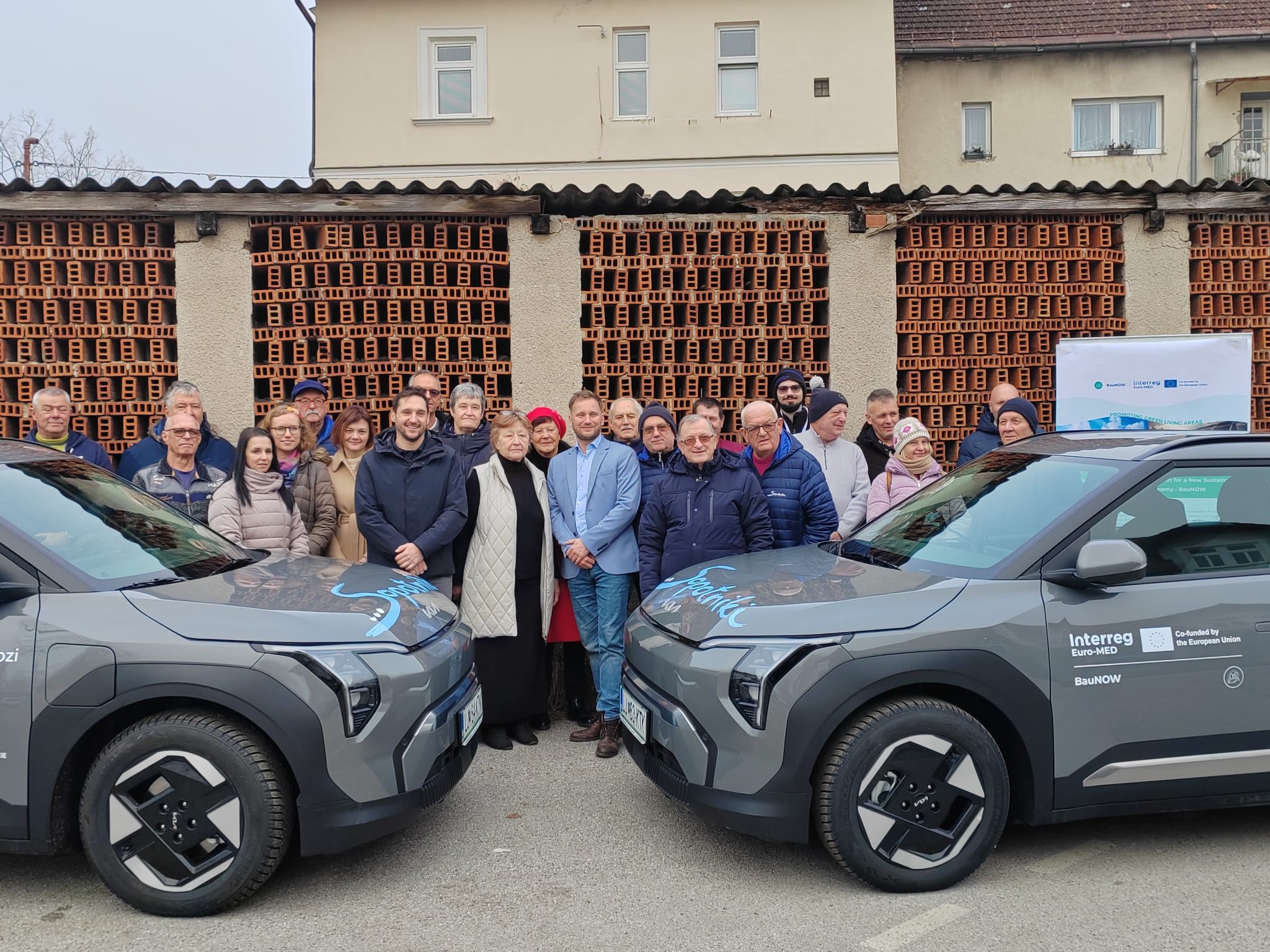
Financed through BauNow, the new electric vehicles will significantly improve the comfort, reliability and energy efficiency of the service by offering easier access, more interior space and suitable performance for daily rides across the wider Kočevje area, including dispersed rural settlements.
The investment arrives at the right time. In 2025 alone, Sopotniki volunteers in Kočevje completed around 1,700 free rides, drove nearly 41,000 kilometres, and provided support to 760 regular users. These figures clearly demonstrate that sustainable mobility solutions can have a direct and measurable human impact when they are built around real community needs.
By linking electric vehicles, volunteer transport, municipal planning and direct user feedback, the BauNow pilot in Kočevje is becoming a strong example of how the green transition can also be inclusive, practical and people-centred.